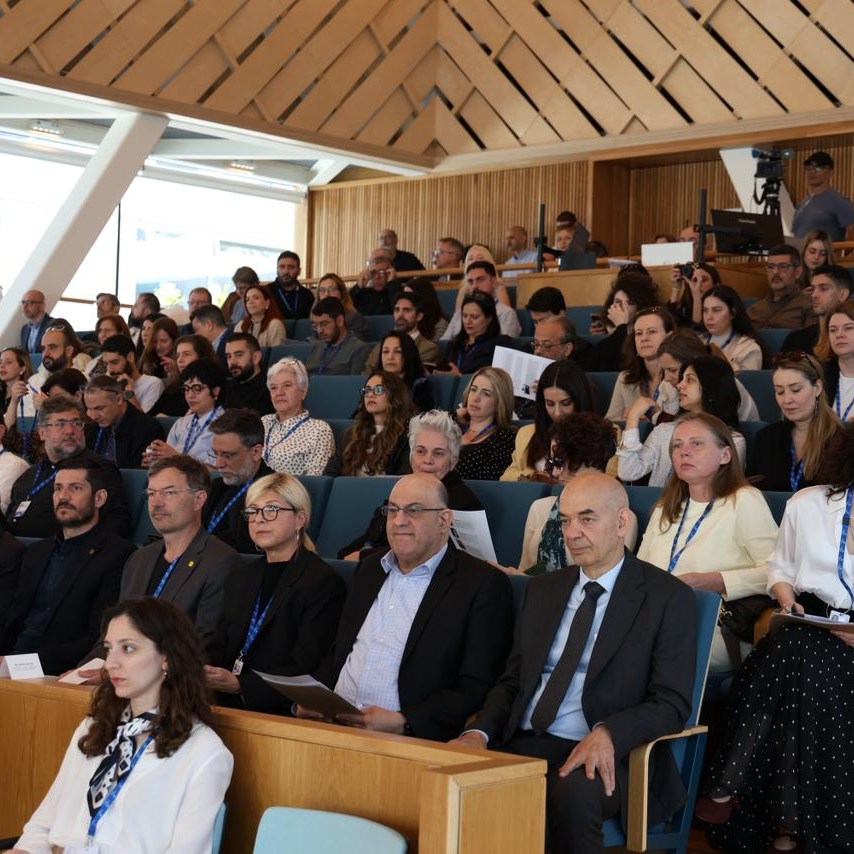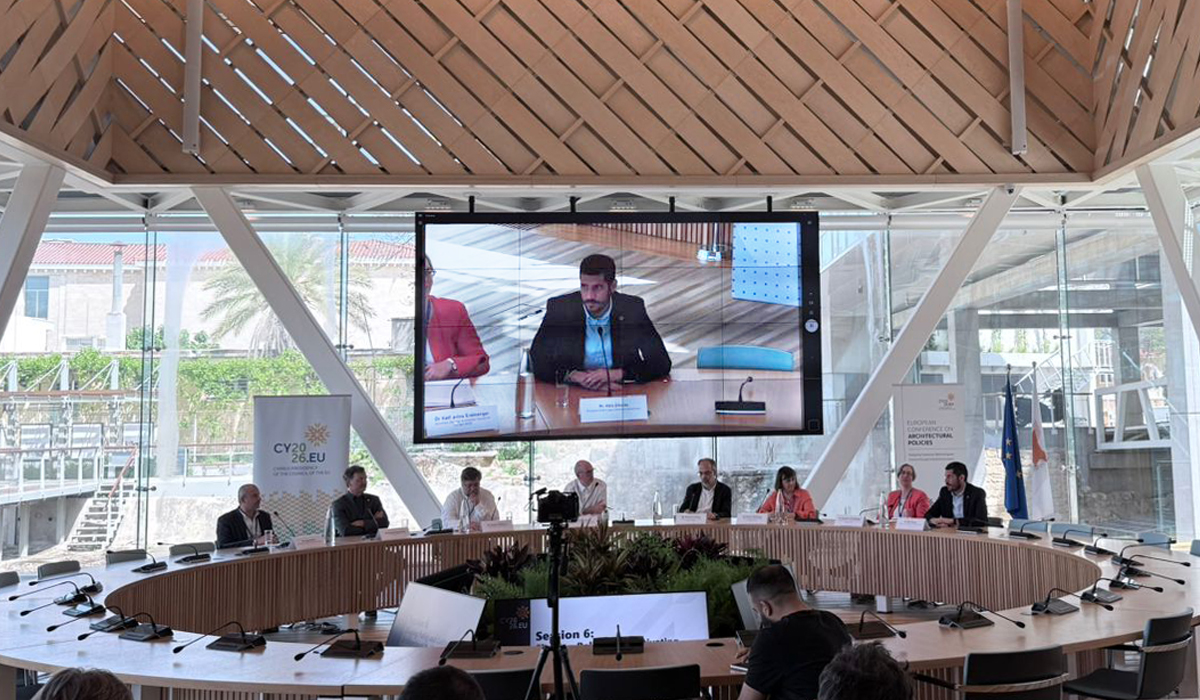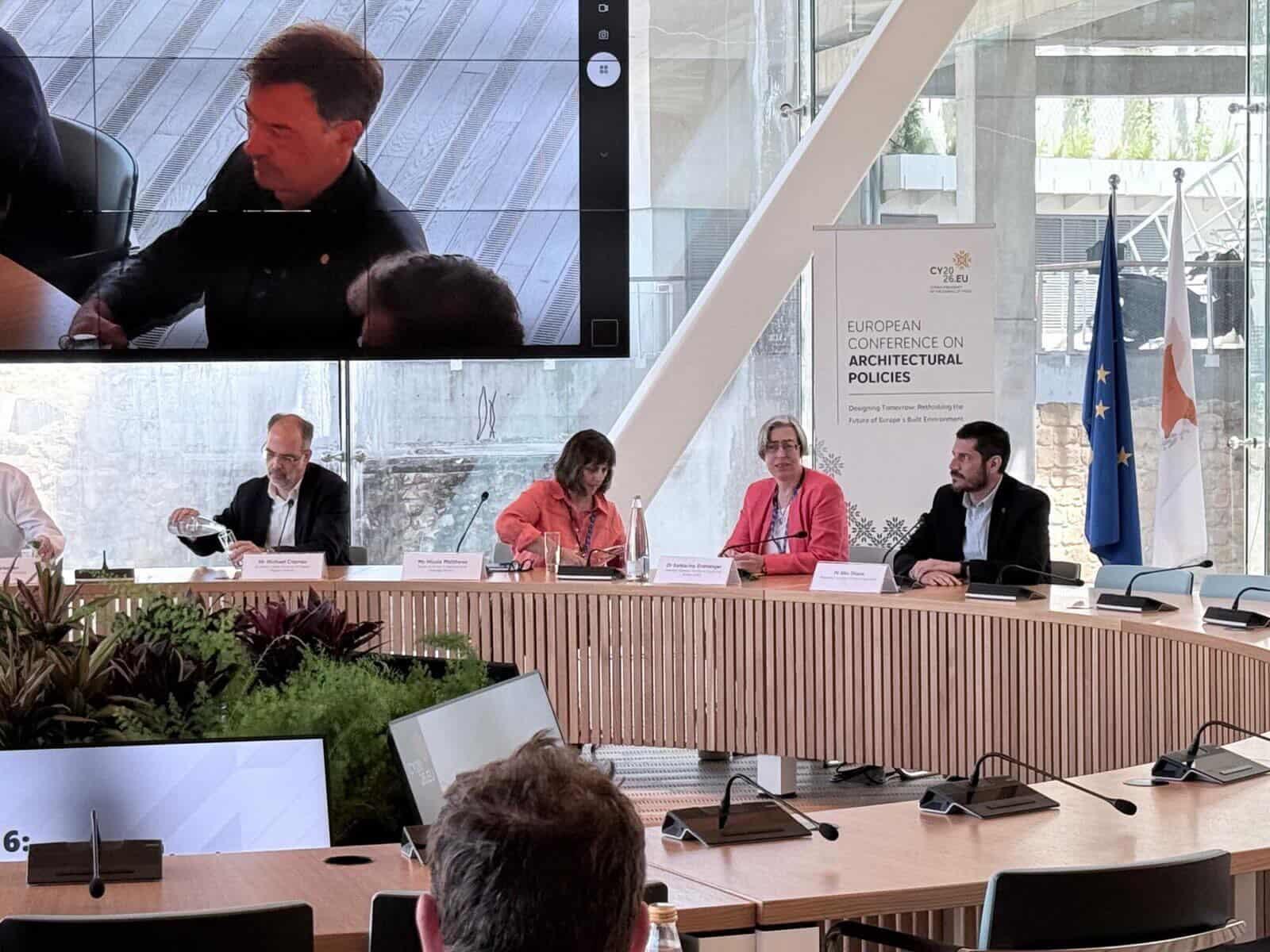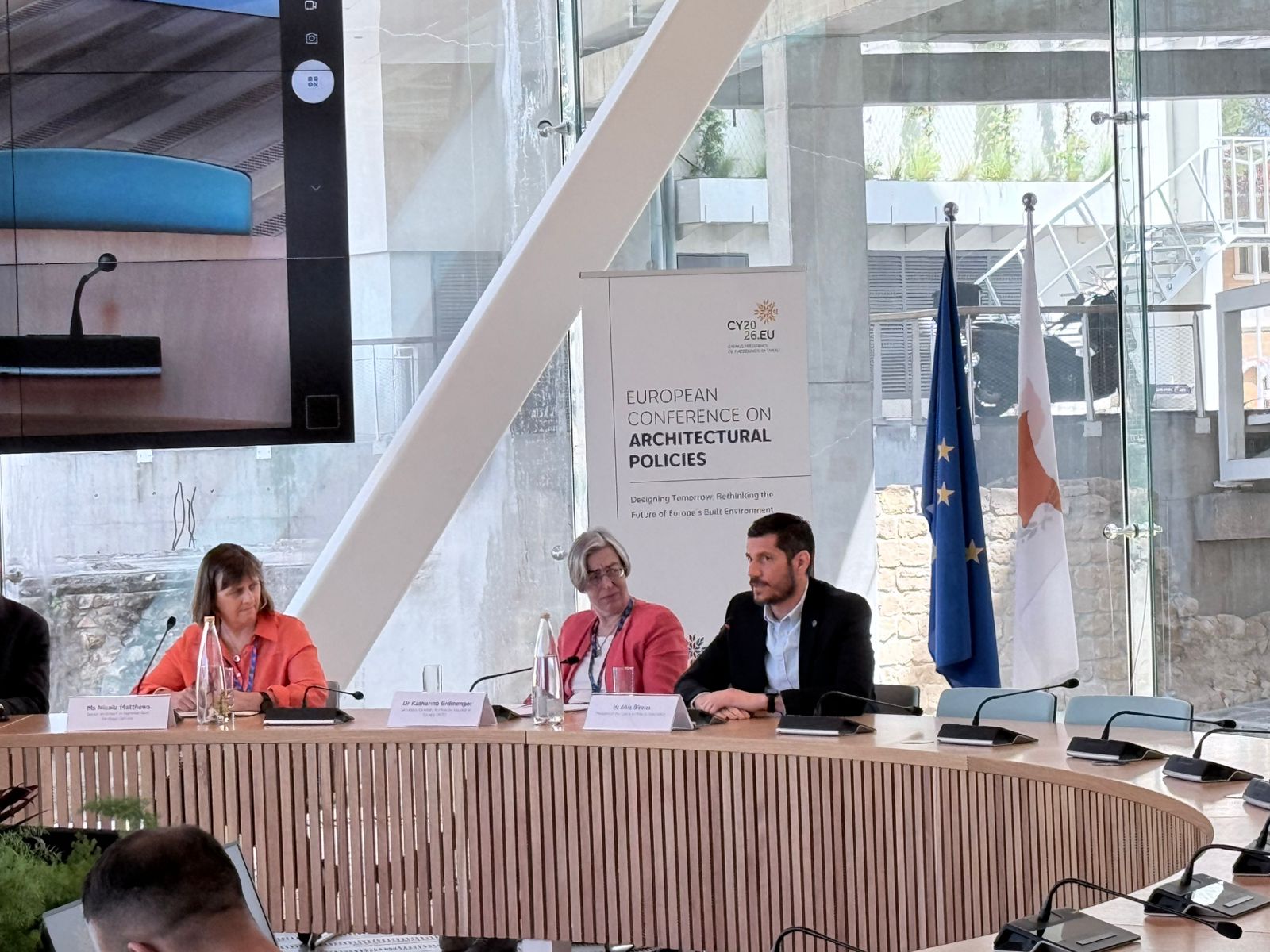

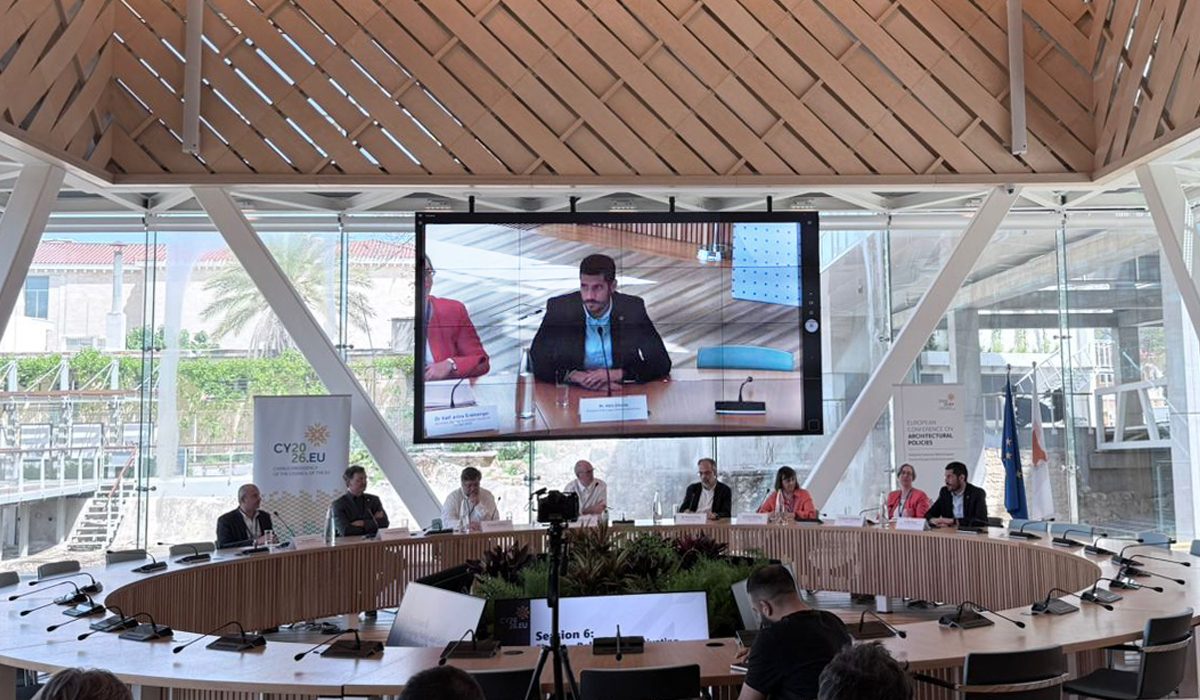
Με ιδιαίτερη τιμή και χαρά, ο Πρόεδρος του Συλλόγου Αρχιτεκτόνων Κύπρου, Άλκης Δίκαιος, απηύθυνε χαιρετισμό στο Ευρωπαϊκό Συνέδριο για την Αρχιτεκτονική Πολιτική (European Conference of Architectural Policies – ECAP), ο οποίο φιλοξενήθηκε στην Κύπρο και διοργανώθηκε από το Τμήμα Πολεοδομίας και Οικήσεως σε συνεργασία με το Τμήμα Δημοσίων Έργων.
Η ομιλία ανέδειξε τον καθοριστικό ρόλο της αρχιτεκτονικής στη διαμόρφωση βιώσιμων, ανθεκτικών και συμπεριληπτικών κοινωνιών, καθώς και την ανάγκη υιοθέτησης μιας ολοκληρωμένης εθνικής αρχιτεκτονικής πολιτικής στην Κύπρο. Παράλληλα, υπογράμμισε τη σημασία της ευρωπαϊκής συνεργασίας, της ποιότητας στον σχεδιασμό και της ενίσχυσης θεσμών, όπως οι αρχιτεκτονικοί διαγωνισμοί, ως βασικών εργαλείων για το δημόσιο συμφέρον και το μέλλον του δομημένου περιβάλλοντος.
Ακολουθεί ο πλήρης χαιρετισμός του Προέδρου στην αγγλική γλώσσα:
It is a great honour and sincere pleasure to welcome you to the European Conference of Architectural Policies, hosted in Cyprus by the Department of Town Planning and Housing in collaboration with the Department of Public Works
Your presence here today gives particular significance to this conference and reflects the growing recognition across Europe of the important role that architecture and architectural policy play in shaping sustainable, resilient, and inclusive societies.
On behalf of the Cyprus Architects Association, I would like to express our sincere appreciation to the Department of Town Planning and Housing for hosting this important gathering and for its commitment and constructive contribution toward advancing the effort to establish a national architectural policy for Cyprus.
Today, architecture carries a responsibility that extends far beyond the design of individual buildings. The challenges facing our societies are increasingly interconnected: climate change, rapid urbanisation, housing affordability, energy transition, cultural identity, demographic change, mobility, and the overall quality of public space all directly relate to the way we shape our built environment. Architecture therefore becomes not only a technical or artistic discipline, but also a social, environmental, cultural, and political responsibility.
Within this context, conferences such as ECAP are particularly important because they create opportunities for meaningful dialogue, collaboration, and the exchange of experiences between countries, institutions, professionals, and policymakers. They strengthen our collective ability to learn from one another and to promote policies that place people, quality of life, and long-term sustainability at the centre of decision-making.
European initiatives such as the New European Bauhaus have further reinforced the importance of architecture within public policy and highlighted the strong relationship between sustainability, inclusion, and beauty. These are not abstract ideas. They directly influence the everyday lives of citizens — the neighbourhoods we inhabit, the schools our children attend, the accessibility of our cities, the quality of our public spaces, and ultimately the sense of dignity, belonging, and identity that architecture can create.
At the same time, the broader European discussion around Baukultur and architectural quality reminds us that the built environment cannot be approached solely through economic or technical criteria. Quality architecture and thoughtful urban planning generate environmental, cultural, and social value. They improve wellbeing, strengthen social cohesion, support economic resilience, and contribute meaningfully to sustainability and climate adaptation.
As architects, policymakers, public authorities, institutions, academics, and professionals, we therefore share a collective responsibility: to ensure that architecture and urban design are recognised as matters of public interest and supported through coherent, forward-looking, and participatory policies.
In Cyprus, this discussion has become increasingly important in recent years. Our country is experiencing significant urban and developmental pressures while simultaneously facing major environmental, housing, mobility, and social challenges. Yet Cyprus remains one of the last countries in Europe without a comprehensive national architectural policy document.
Recognising this important gap, the Cyprus Architects Association, in collaboration with the Technical Chamber of Cyprus, has prepared a national architectural policy document aimed at establishing a long-term strategic vision for the quality of our built environment. This initiative seeks to place architecture at the centre of broader discussions concerning sustainability, culture, education, housing, urban planning, public procurement, and the overall wellbeing of society.
At the same time, significant efforts are being made to strengthen and establish a stronger culture of architectural competitions in Cyprus, promoting transparency, inclusiveness, equal participation, and quality-driven procedures for projects of public importance. Through the close collaboration of the Cyprus Architects Association, the Technical Chamber of Cyprus, public authorities, and local governments, architectural competitions are increasingly recognised as essential tools for securing design excellence and strengthening public confidence in decision-making processes.
In this effort, the contribution and influence of the Architects’ Council of Europe and the Arch-E project have been particularly important in strengthening the broader European dialogue around architectural policies, architectural competitions, and the quality of the built environment. We would therefore like to sincerely thank the Architects’ Council of Europe for its ongoing support, collaboration, and commitment to advancing architectural quality and policy across Europe.
One particularly important recent development has been the successful effort to persuade the government to promote and implement architectural competitions for approximately 500 units of affordable housing across all districts of Cyprus. This initiative represents an important milestone not only for Cyprus but also within the broader European discussion on housing quality, demonstrating that affordable housing can and should be approached through quality architecture, thoughtful urban planning, and socially inclusive design processes. In this regard, I would also like to sincerely thank the Department of Town Planning and Housing for its ongoing collaboration, support, and constructive approach in advancing this important initiative.
Our ambition is therefore not simply to produce another technical document. Our ambition is to create a meaningful framework for dialogue, cooperation, and long-term vision that can guide future decision-making and strengthen the role of quality architecture within public policy. Together with the Department of Town Planning and Housing, we are now working toward advancing this effort through an open and constructive consultation process involving governmental bodies, ministries, local authorities, organizations, academic institutions, and professional stakeholders.
We strongly believe that successful architectural policy cannot emerge through isolated decisions. It must emerge through dialogue, participation, transparency, interdisciplinary thinking, and collective responsibility. Most importantly, it requires continuity and long-term vision that extends beyond political cycles and short-term priorities.
This effort is especially important for future generations. The decisions we make today regarding our cities, landscapes, infrastructure, housing, and public spaces will shape the lives of citizens for decades to come. The built environment is one of the most permanent expressions of our collective values and priorities as societies. For this reason, quality in architecture is not a luxury — it is a necessity.
We are especially pleased to host this important discussion in Cyprus, a country located at the crossroads of Europe, the Middle East, and the Mediterranean, where history, culture, memory, and contemporary challenges coexist in unique and often complex ways. We believe that this setting offers a particularly meaningful backdrop for discussions concerning the future of architecture and architectural policy in Europe.
I sincerely hope that the discussions of the coming days will be productive, inspiring, and constructive for all participants, and that this conference will contribute meaningfully to strengthening cooperation and exchanging valuable experiences, ideas, and policies among our countries and institutions.
Thank you once again for your presence, your contribution, and your commitment to the future of architecture and the quality of our built environment.
I wish you all a successful, inspiring, and meaningful conference.